
Blog Topics
Across Addison County, the leaves have fallen, and the weather’s getting colder. Property owners in Middlebury, Cornwall, and Weybridge are looking at trees with bare crowns, making it hard to tell the difference between a dead or damaged tree and one that’s simply dormant. So why prune trees in winter at all?
Weak unions (where a limb meets the trunk at a narrow angle) and storm-damaged limbs are easiest to spot when the crown’s bare. With snow and ice loads quickly approaching, finding them now gives you time to address them before spring growth.
Key Takeaways
- A bare tree in winter is usually dormant, not dead, and a bud check, scratch test, and bend test across several branches can confirm it.
- Winter is a good time to prune because bare branches show structure, fewer pests and diseases are active, and frozen ground protects lawns and understory plants.
- Flowering cherry and redbud should be pruned right after they flower, and our ISA Certified Arborists confirm the right timing for bleeders like sugar maple.
- One visit can cover several trees, so booking now lines up late-winter work, while large limbs, ice, and power lines belong with an ISA Certified Arborist.
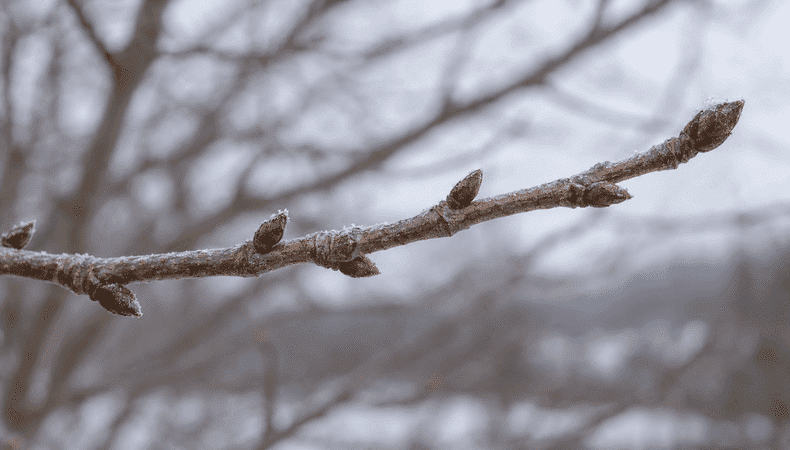
Healthy buds on the twig tips point to a living tree, even when the crown is bare.
Why Is Winter a Great Time to Prune Trees?
Winter is one of the best times for most structural pruning because a dormant tree puts no energy into leaves or shoots while the work is done. During the cold months, deciduous trees pause growth, so a bare crown is normal rather than alarming. You can tell the difference between a dead tree and a dormant one in a few ways:
- Bud Check : Healthy buds on twig tips point to a living tree.
- Scratch Test : Scratch a small twig; green, moist tissue means alive, and brown, dry tissue means dead.
- Bend Test : Live twigs flex, while dead ones snap.
Test more than one branch, and if you get conflicting results, have an ISA Certified Arborist come take a look instead of just guessing. A quick check doesn’t prove a tree’s safe, since a living tree can still carry a weak union or a failing limb.
The Benefits of Dormant Season Pruning
Winter favors both the tree and property when it comes to pruning. In Vermont, late winter is often the strongest window, just before spring growth starts. There are four main benefits to dormant season pruning:
- Clear View of Structure : Without leaves, crossing branches, weak unions, and dead wood stand out, so cuts can be planned around the whole crown.
- Fewer Pests and Diseases : Fewer insects and diseases are generally active in the dormant season, which lowers the pressure on fresh cuts.
- Faster Wound Closure : Closure is fastest when cuts are made just before spring growth, which is why late winter is the target.
- Frozen Ground : Frozen soil supports equipment and shields lawns and understory plants.
Are There Trees That Shouldn’t Be Pruned in Winter?
Yes, a few trees are better off in a different time frame. Most exceptions are made because of sap flow or flowering, so what the tree is about to do makes a difference. There are two groups to make note of when you’re considering pruning in the winter:
- Sugar Maple and Other Bleeders: Maples, birch, and elm bleed sap from late-winter cuts, and our ISA Certified Arborists will confirm the right timing for yours.
- Spring Bloomers : Flowering cherry and redbud are best pruned right after flowering, and lilac and forsythia lose flowers if pruned in late winter.
Our ISA Certified Arborists will determine the proper timing for each of your trees. Great trees don’t happen by accident; they happen when the right things are done correctly and at the right time.
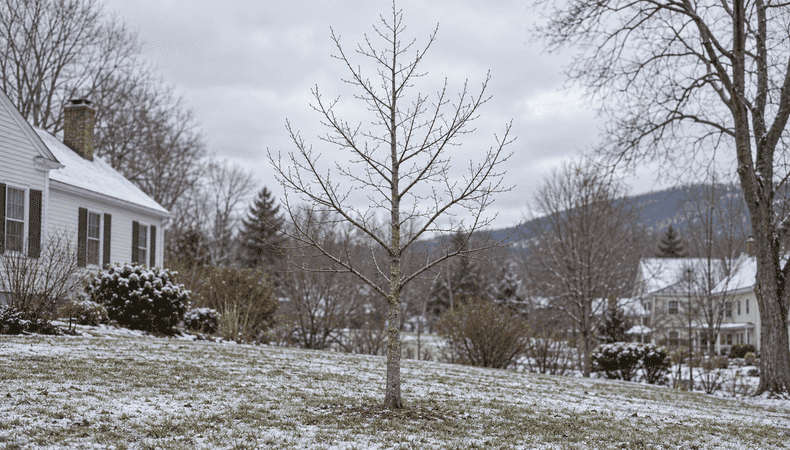
Young trees do best with one dominant leader and well-spaced,
How Should Young Trees Be Pruned in Winter?
Structural pruning crafts a strong frame in young trees, while mature trees get lighter care, like removing deadwood, improving clearance, reducing hazards, and limiting live-wood removal. There are four factors that impact structural pruning for those young trees:
- Timing : Keep pruning minimal after planting, wait until about three years in to begin structural pruning, and do it during the dormant season.
- Single Dominant Leader : Aim for one leader with no codominant trunks.
- Strong Branch Unions: Wide, U-shaped unions stay, while narrow, V-shaped ones are removed or reduced.
- Cut Size : Make cuts of about one inch in diameter where possible.
Can One Visit Cover a Larger Property?
Yes, one visit can cover a larger property, with each tree getting the timing and level of care it needs, including the few that wait for spring.
What a Visit to a Multi-Tree Property Looks Like
Every visit starts with a walk and ends with one plan. This approach suits the larger properties throughout Middlebury, Cornwall, and Weybridge. Our arborist services then cover the ongoing care each tree needs. Four things make a single visit work:
- Walk of the Property : An ISA Certified Arborist assesses each tree, so the plan fits it rather than a template.
- Sequenced Work : Young-tree structural work is scheduled alongside lighter mature-tree maintenance.
- Tree Inventory : On larger properties, a digital inventory helps prioritize and schedule work.
- Hazard Work : Large branches, ice and snow, and anything near power lines call for an ISA Certified Arborist, and are never a cut you can do yourself.
Planning Pruning Ahead of This Winter
Usually, late winter is one of the best windows for deciduous trees, so fall is the time to get them on the schedule. Booking now lets the work be planned instead of rushed in the beginning of winter. One of the Limbwalker ISA Certified Arborists will confirm the specific timing for your trees before a single cut is made. After you request an estimate, there are three arborist-led steps that follow:
- Goal Conversation : The arborist asks what you want for the tree.
- Site Assessment : The arborist looks at age, health, species, and structure, along with site factors such as power lines and access.
- Written Estimate : The proposed work is laid out in writing.
Frequently Asked Questions About Pruning Trees
How often should trees be pruned?
Prune young trees as they establish, starting about three years after planting, and mature trees only as needed to remove dead, damaged, or hazardous wood. Mature trees may need only occasional pruning to remove dead wood. Ornamental trees kept small, like crabapples, need more frequent pruning to hold their scale.
How much of a tree can be pruned in one year?
No more than one-quarter of the living crown in a year, with anything more spread over successive years. Every cut is a wound the tree has to close, so lighter is usually better.
Can dead branches be removed outside the dormant season?
Yes, dead or broken wood can come off at any time. A limb that threatens a house, driveway, or walkway should not wait for winter and is worth an arborist’s assessment right away.
Is topping a good way to reduce a tree’s size?
No. Topping and over-thinning are common mistakes whose damage can be permanent. Crown reduction instead shortens branches selectively to keep structure and balance, and we do not top trees.
Do you need a permit to prune trees near a lake in Vermont?
Not if the work follows the Vegetation Protection Standards of Vermont’s Shoreland Protection Act. The Act applies within 250 feet of Lake Champlain or any lake larger than 10 acres, and pruning or removing trees within 100 feet of the water is allowed when it follows those standards.
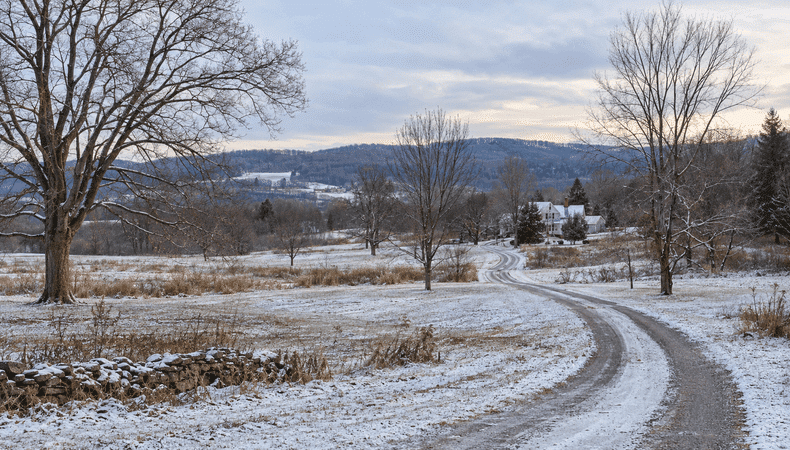
Several bare hardwood trees spread across a large rural Vermont property under a pale winter sky
Schedule Your Winter Pruning with Limbwalker Tree Service
Great trees come from someone who looks closely at each one, and Limbwalker gives you a straightforward assessment of every tree, even when it doesn’t need anything. Request an estimate to schedule your winter pruning, and tell Limbwalker which trees concern you.
Vermont, Let’s Grow Great Trees Together
Whether you need pruning, planting, removal, pest and disease management, or help navigating a shoreline protection permit, we’re here and ready to bring our experience to your property.
Our Articles!
What Does an Arborist Look For During a Fall Tree Assessment in Vermont?
Wondering what a Vermont arborist checks during a tree assessment? See the canopy, trunk, and root signs that signal it's time to call one before winter.
Can You Remove Trees Near a Shoreline in Vermont?
Removing a tree near a Vermont shoreline? Different rules apply within 100 and 250 feet of the water. Learn what homeowners need to know before cutting.
Why Fall Is a Great Time to Plant Trees in Vermont
Planting trees in Vermont this fall? Cooler weather and warm soil can help new trees establish strong roots before winter. Learn how to get started.
