
Blog Topics
By the time Vermont’s leaves start changing and the first frost is creeping into the forecast, planting a new tree may feel like something that should wait until spring. But for many trees, this short stretch before winter can be one of the best opportunities to get them in the ground.
Fall planting can give a new tree an important head start, but timing matters in Vermont. Here’s why fall works so well, how late you can plant, and what you need to do to help a new tree make it through its first winter.
Key Takeaways
- Plant early enough to allow roughly six weeks of favorable root-growing conditions before the ground freezes.
- Soil stays warm for weeks after the air cools, so roots keep establishing long after the leaves drop.
- Most deciduous trees plant beautifully in fall, while some evergreens and fleshy-rooted species are better held for spring.
- Plan to plant early enough in the fall to give the roots several weeks to establish before the soil freezes.
- Choosing the right species and planting location matters just as much as timing and will have a much bigger impact on the tree’s long-term success.
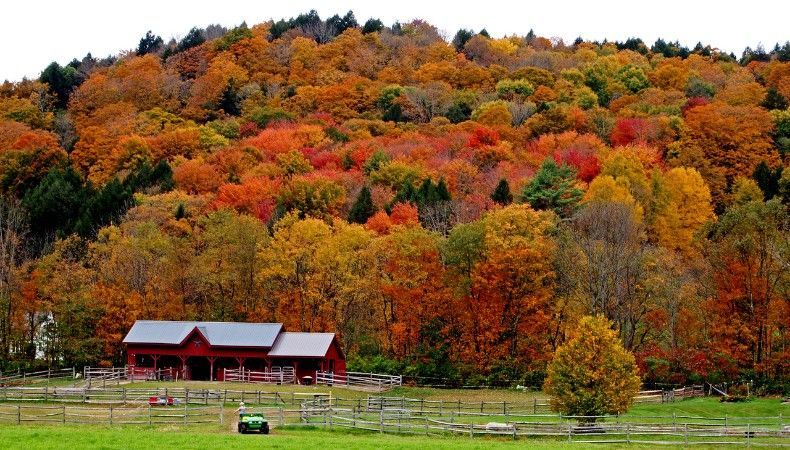
Peak foliage across the central corridor signals the strongest planting stretch of the year, roughly mid-September through mid-October.
Is Fall a Good Time to Plant Trees in Vermont?
Yes. Across the Champlain Valley and central corridor in towns like Montpelier, Warren, Waterbury, and the surrounding area, fall planting generally begins in September and can extend into early October, but the right cutoff varies with elevation, species, weather, and when the ground is expected to freeze. It can also be more dependable than spring, when late frosts can unexpectedly shorten Vermont’s planting window.
Why Fall Is a Great Time to Plant Trees
Several conditions make fall an especially good time to plant trees in Vermont:
- Warm Soil Supports Root Growth: Soil cools more slowly than the air, allowing roots to continue growing even after temperatures above ground begin to drop. Roots can remain active while soil temperatures stay above about 40°F.
- Cooler Weather Reduces Stress: Newly planted trees aren’t immediately exposed to summer heat while recovering from transplanting and beginning to establish.
- Fall Typically Brings More Consistent Moisture: Seasonal rainfall can help keep the root zone moist, although newly planted trees still need supplemental watering when rainfall isn’t enough.
- Trees Have a Head Start in Spring: Root growth that begins in fall puts the tree in a better position to support new leaves and shoots when growth resumes.
Which Trees Are Best to Plant in the Fall in Vermont?
Deciduous trees are generally the best candidates for fall planting in Vermont because they can begin establishing roots as they enter dormancy. Evergreens and some cold-sensitive species need more time to establish before winter and may be better planted in spring.
Best Trees to Plant in Fall
Once they start easing into dormancy, deciduous trees can handle fall planting well. For a yard in Vermont, there are a few dependable choices:
- Red maple
- River birch
- Linden/basswood
- Honeylocust
- Elm
- Hawthorn
- Apple/crabapple, where appropriate
Best Trees to Wait and Plant in Spring
If needled evergreens don’t go early in the fall window (September or the first days of October), they should wait until spring, as the winds and frozen soil of winter are hard on freshly planted conifers. A few types that should wait:
- Broad-leaved evergreens
- Large balled conifers
- Magnolia
- Tuliptree
- Oak
Can You Plant Fruit Trees in Vermont in the Fall?
When timed early, fall planting can work for many container fruit trees. But bare-root trees are generally planted in early spring while dormant. Stone fruits can also be more sensitive to winter injury, so spring may be the safer choice in colder Vermont locations. If you’re deciding which types to grow, our guide to the best fruit trees for Vermont details the varieties that work best here.
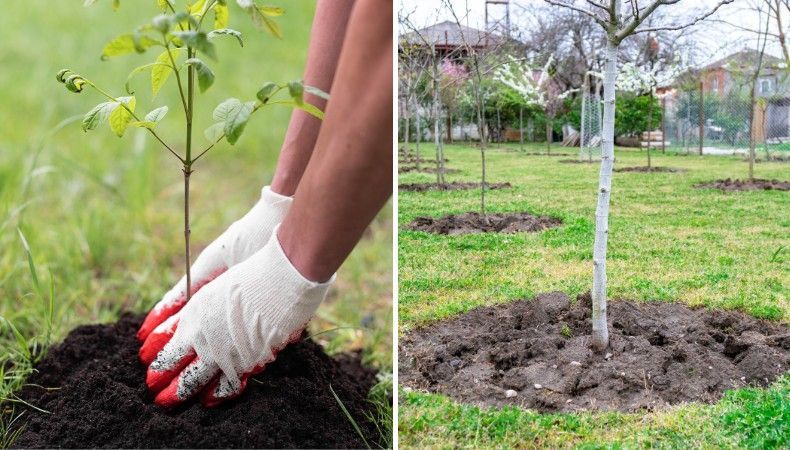
Choosing a tree suited to your soil, sunlight, and available space gives it a stronger foundation for healthy growth.
How Do You Choose the Right Tree for Your Property?
The best planting season can’t make up for putting the wrong tree in the wrong place. A tree planted at exactly the right time can still struggle in poorly drained soil, grow into utility lines, damage nearby hardscaping, or decline because the site doesn’t provide the sunlight, space, or conditions that species needs.
Before choosing a tree, look beyond what fits the space today and consider what it will need as it grows:
- Soil and Drainage: Some trees tolerate wet soil, while others need a site that drains quickly.
- Sun Exposure: Match the species to the amount of direct sunlight the planting site receives throughout the day.
- Mature Size: Consider the tree’s eventual height and canopy spread, not the size you bring home from the nursery.
- Nearby Structures and Utilities: Leave enough room for the tree to mature without interfering with your home, driveway, walkways, overhead lines, or underground utilities.
- Site Conditions: Elevation, wind exposure, and other microclimate conditions can affect how well a species handles Vermont winters.
An ISA Certified Arborist can evaluate the site first and recommend trees suited to the conditions already there, rather than trying to make the property accommodate the wrong species. Our arborist services can help with species selection and planting, and you can explore our Vermont tree arboretum to learn more about trees that grow well in the area.
How Do You Help a New Tree Survive Its First Vermont Winter?
Getting your new tree through its first Vermont winter comes down to a few important do’s and don’ts. These steps can help protect its roots from winter damage and give it a stronger start in spring:
- Water Deeply Before the Ground Freezes : A well-hydrated tree resists winter drying far better than a thirsty one, and fall rain doesn’t automatically eliminate the need for watering.
- Mulch Two to Three Inches : Spread mulch in a ring around the tree to help insulate the roots and retain soil moisture, but keep it several inches away from the trunk.
- Stake for Support and Protection: Loosely tied stakes can help stabilize a new tree in heavy fall winds while also keeping foot traffic away from its root zone.
- Skip the Fertilizer : Don’t fertilize a newly planted tree unless a soil test or professional recommendation indicates a need. Late-season nitrogen can encourage new growth that may not harden off before winter.
- Don’t Prune Heavily at Planting : Save structural pruning for later, once the tree has established.
Planting an evergreen? Watch for winter burn. Newly planted evergreens can lose moisture through their needles during winter when frozen soil prevents their roots from replacing it. Water deeply before the ground freezes and, in exposed locations, consider a burlap windbreak placed on the windward side rather than wrapped around the tree. Choosing a protected planting location can also reduce winter exposure, which is one reason proper siting matters when planting a new tree.
Frequently Asked Questions About Planting Trees in the Fall
How deep should you dig when planting a tree?
Dig the hole no deeper than the tree’s root ball, with the root flare sitting at or slightly above the surrounding soil level. Make the hole two to three times wider than the root ball to give the roots room to spread. Avoid planting too deeply, which can bury the root flare and cause long-term problems.
Should I mix compost into the hole?
No. Backfill with the same soil you dug out. Richly amended soil in a pocket of ordinary ground encourages roots to circle inside that pocket instead of pushing out into the native soil, which leaves the tree poorly anchored and dependent on a very small root zone.
Do I take the burlap and wire basket off?
Yes, once the tree is positioned correctly in the hole, remove as much of the wire basket, twine, and burlap as possible without disturbing the root ball. Synthetic burlap should be removed completely because it does not break down reliably in the soil.
Will a larger tree give me shade faster?
A larger tree provides more shade right away, but it also takes longer to establish after transplanting. Smaller trees generally establish more quickly and may eventually catch up to larger transplants, so bigger isn’t always better for long-term growth.
How long does it take a newly planted tree to establish?
Establishment time depends on the tree’s size, species, site conditions, and care. A commonly used estimate is about 1.5 years for every inch of trunk caliper, meaning a 2-inch tree may take around three years to fully establish its root system.
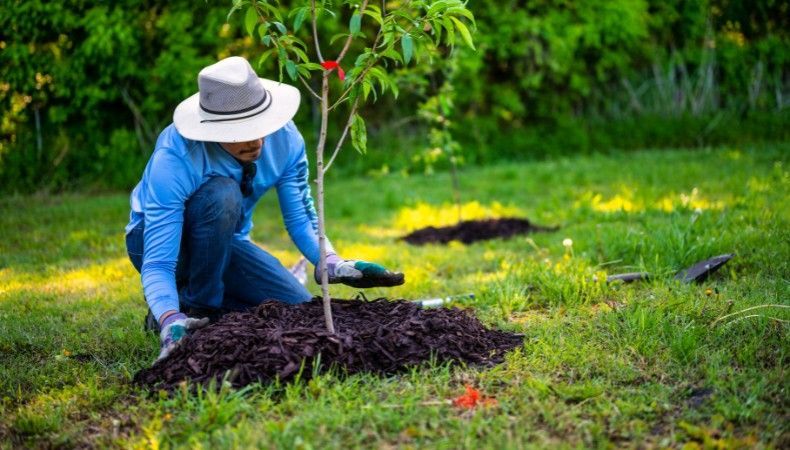
A two-to-three-inch layer of mulch helps retain soil moisture and insulate new roots through winter, but should be kept several inches away from the trunk.
Schedule Your Fall Tree Planting with Limbwalker Tree Service
Fall can be one of the best times to plant trees in Vermont, but success depends on more than getting a tree in the ground before winter. Plant early enough for roots to begin establishing, choose a species suited to your property, and give the tree the water and protection it needs through its first winter. The right tree in the right place, planted at the right time, has a much better foundation for years of healthy growth.
Great trees don’t happen by accident. If you want to add a tree this year, your next move should be getting an ISA Certified Arborist out to your property before the season ends. Request an estimate or call us today at 802-989-9343, and we’ll help you pick the right tree for the right spot at the right time.
Vermont, Let’s Grow Great Trees Together
Whether you need pruning, planting, removal, pest and disease management, or help navigating a shoreline protection permit, we’re here and ready to bring our experience to your property.
Our Articles!
Can You Remove Trees Near a Shoreline in Vermont?
Removing a tree near a Vermont shoreline? Different rules apply within 100 and 250 feet of the water. Learn what homeowners need to know before cutting.
Why Are My Tree’s Leaves Turning Yellow in Summer?
Seeing yellow leaves or early drop on your Vermont trees this summer? Learn what heat and drought stress look like and when to call a certified arborist.
What Tree Pests and Diseases You Should Watch for in Vermont
A guide to tree pests and diseases in Vermont that homeowners should watch for and what to do next if you suspect your tree is at risk of decline.
