
Blog Topics
By the time the ground thaws across the Champlain Valley in the spring, saturated soils, winter-fatigued branch unions, and the lingering effects of past ice storms have already set the stage for another season of tree failures. For homeowners in Burlington, Shelburne, and Charlotte, hazardous tree removal in Vermont is often the result of storm damage, root instability, or structural weaknesses that have been building for years before the tree finally fails.
The good news is that most hazardous trees show warning signs before they become emergencies. Canopy decline, trunk defects, root damage, and structural weakness often appear well in advance of failure, giving homeowners time to address the issue before it leads to property damage or safety risks.
Key Takeaways
- A tree is only a hazard when a structural defect has a target—like a person, structure, or vehicle—within its failure zone.
- Most hazardous trees show warning signs prior to coming down, including trunk cracks, heaving soil, fungal conks, and sudden dieback.
- Vermont’s ice storms, spring thaw saturation, and Champlain Valley winds put additional stress on species like silver maple, white pine, and disease-weakened ash.
- Not every hazardous tree needs to come down—pruning, cabling, and root zone care can usually reduce the risk.
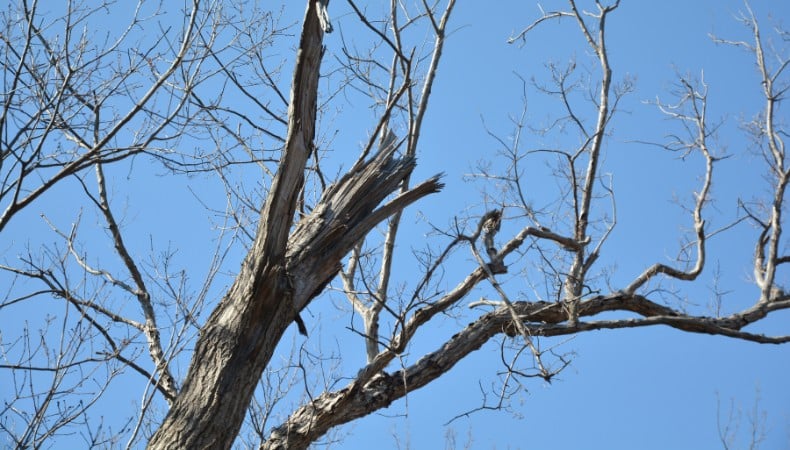
Splintered, broken limbs left hanging after winter storms are an early-spring warning sign worth flagging during a yard walk-through.
What Makes a Tree Hazardous?
A tree becomes hazardous when it has a structural defect and a target, like a person or structure, within its failure zone. Both pieces have to be present, though. A decaying oak deep in the woods isn’t a hazard in any practical sense, while the same tree standing over a driveway or bedroom immediately becomes one.
Certified Arborists evaluate hazard through three lenses at the same time:
- The likelihood of failure,
- The environmental conditions acting on the tree,
- And whether anything valuable sits in the fall zone.
The Champlain Valley adds pressure on all three.
Open-water wind fetch across Lake Champlain stresses lakefront canopies in ways inland trees rarely experience. Spring thaw in March and April, and again in November and December prior to the ground refreezing, saturates soil and reduces root anchorage right when storms are most severe. Cumulative fatigue from past ice storms continues to show up years later at weak branch unions.
High-Risk Situations on Vermont Properties
- Large mature trees near homes, garages, or outbuildings.
- Trees leaning toward a structure or over a driveway.
- Canopy trees along lakefront property lines exposed to open wind fetch.
- Trees near powerlines or frequently used walkways.
What Are the Warning Signs of a Hazardous Tree?
The most common warning signs of a hazardous tree appear in the canopy, on the trunk, and around the root flare. A slow walk around each major tree on the property, ideally after the spring thaw, catches most growing issues.
Canopy Warning Signs
- Large dead branches still attached high in the crown, usually called “widow makers.”
- Sudden branch dieback, especially concentrated on one side of the canopy.
- Sparse, undersized, or off-color foliage compared to neighboring trees.
- Epicormic sprouting along the trunk or major limbs, which is a stress response that usually signals root or vascular problems.
Trunk Warning Signs
- Vertical splits or cracks, especially two cracks on opposite sides of the trunk, which is a strong indicator of root injury.
- Included bark at V-shaped codominant stems, where trapped bark prevents a solid wood connection; these junctions split under wind load or ice.
- A sudden lean that wasn’t there prior to a recent storm, this is distinct from a gradual lean a tree may have held safely for decades.
- Cavities or hollows in structural wood.
Base and Root Warning Signs
- Fungal conks or shelf fungi at the base, which is an indicator of internal decay, though absence doesn’t guarantee a sound trunk.
- Heaving or cracked soil on the lean-away side, or exposed roots pulling from the ground.
- Visible root damage from past construction, trenching, or grade changes.
- Saturated or standing water at the root flare after a thaw or heavy rain.
Not everything that appears concerning is an acute hazard. Lichen on the bark, minor surface damage, and a long-standing gradual lean typically don’t indicate structural failure. What matters is a change—like a new lean, a crack that wasn’t there last year, or a canopy that suddenly looks thinner. Routine structural pruning to reduce deadwood addresses many of these issues before they become hazardous.
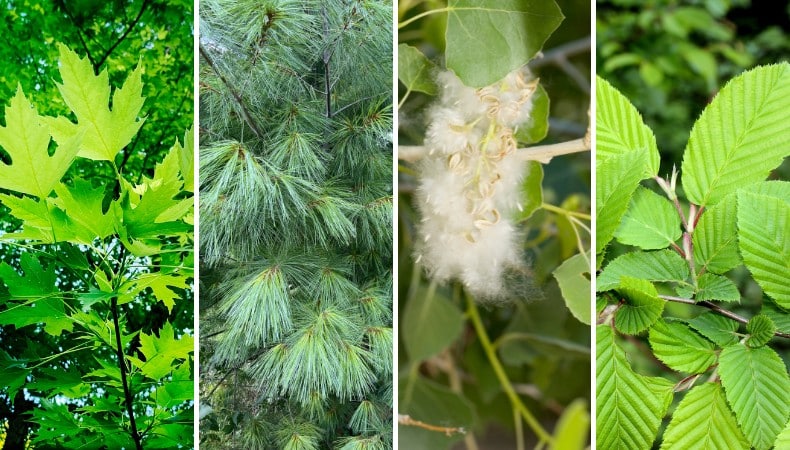
Silver maple, white pine, cottonwood, and American elm—four species that warrant closer attention near homes and driveways in the Champlain Valley.
Which Vermont Tree Species Are Most Prone to Failure?
Any tree can become hazardous, but specific species are more susceptible to the ice load, wind exposure, and saturated soils common across the Champlain Valley. The following isn’t a list of trees you should not plant, as healthy specimens in well-chosen locations do fine. It’s a list of species that call for closer attention near a house, driveway, or regular gathering spot.
Species with Elevated Failure Risk in the Champlain Valley
- Silver Maple: Fast-growing with brittle wood and a long history as an ice-storm casualty; common throughout older Burlington and Shelburne neighborhoods.
- White Pine: Susceptible to ice and wind damage, and shallow root systems struggle to anchor in saturated spring soils.
- Cottonwood and Large Poplars: Short-lived, brittle, and prone to sudden limb drop even in calm weather.
- American Elm and Disease-Weakened Ash: Structurally compromised by Dutch elm disease and emerald ash borer; these trees tend to look alive longer than they actually are, which is what makes them dangerous.
- Willow: Brittle wood, frequently planted near water where root anchorage is already marginal.
For homeowners in Chittenden County, EAB-weakened ash deserves special mention. An infested ash can hold its canopy long enough to appear mostly healthy from the ground while its wood becomes gradually more brittle. Proactive monitoring of ash trees, and knowing when to call an arborist, is precisely how great trees, and the people below them, are kept safe.
Do Hazardous Trees Always Need to Be Removed?
Not every hazardous tree has to come down. In many cases, there are a few options that can reduce risk enough to keep the tree standing safely. Because Limbwalker takes a preservation-minded approach whenever possible, some of the most common risk-reduction options include:
- Structural Pruning: Removing deadwood, reducing wind sail, and addressing weak attachments before they fail under load.
- Cabling and Bracing: Hardware-assisted support for trees with included bark, codominant stems, or split leaders that can be stabilized instead of lost.
- Root Zone Management: Decompaction, mulching, and airspading for trees whose root systems have been damaged by construction or compacted by traffic.
When a Hazardous Tree Should Be Removed
Low-impact tree removal becomes the only safe option in a narrower set of situations:
- Advanced decay in structural wood at the base.
- Severe root plate failure.
- A trunk split that’s propagating.
- A tree leaning toward a high-value target with no way to reduce exposure.
Frequently Asked Questions About Hazardous Trees in Vermont
What makes a tree hazardous?
A tree is hazardous when it has a structural defect, like a crack or severe lean, and a target within its possible failure zone. Both components have to be present; a dead tree with nothing below it isn’t a hazard in the same way as one standing over a home.
How do I know if a tree on my property is dangerous?
Look for warning signs in three places:
- The canopy (dead branches, sudden dieback)
- The trunk (cracks, included bark, new lean)
- The base (fungal conks, heaving soil, exposed roots)
Any one of these calls for a closer look from a Certified Arborist, especially after a storm.
Can a hazardous tree be saved without removing it?
Often, yes. Structural pruning, cabling and bracing, and root zone care can greatly decrease risk for many trees. Removal is the best answer when decay, root failure, or trunk splits have compromised structural integrity beyond mitigation’s capabilities.
When should I call an arborist for a hazardous tree?
Call an arborist as soon as you notice warning signs. A spring assessment after the ground thaws is ideal, since saturated soils and winter damage make problems clearer before the arrival of heavy-storm season.
Is a leaning tree always hazardous?
Not necessarily. A gradual lean a tree has held for years, with compensating root growth, may be stable. A sudden lean, especially after a storm, is a serious warning sign and should be quickly assessed by a Certified Arborist.
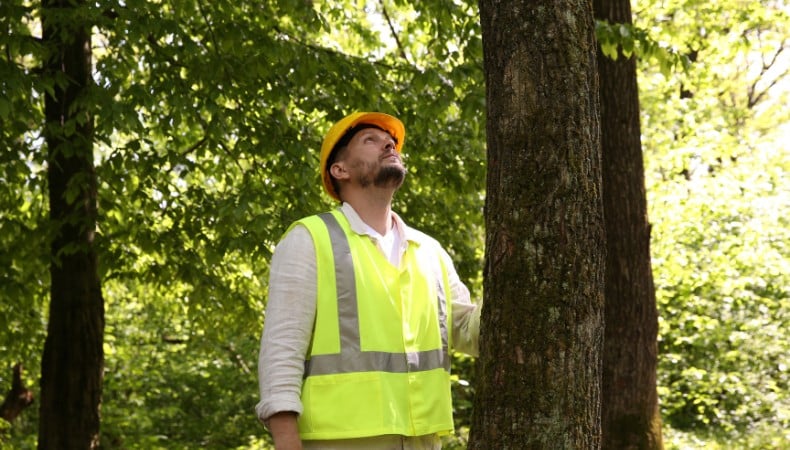
A hazard assessment from an ISA Certified Arborist weighs structural condition, target exposure, and environmental factors together.
Schedule a Hazard Assessment for Your Vermont Property with Limbwalker
Most hazardous trees make themselves known before they fall. Homeowners should know what to look for and how to act on it. A yearly spring walk-through, done once the ground has thawed and before storm season, is the best habit for any Burlington, Shelburne, or Charlotte homeowner with mature trees on the property.
Schedule a hazard assessment with Limbwalker’s ISA Certified Arborists to get a complete picture of what’s standing over your Greater Burlington property and what, if anything, should be done about it. Call us today at 802-989-9343!
Vermont, Let’s Grow Great Trees Together
Whether you need pruning, planting, removal, pest and disease management, or help navigating a shoreline protection permit, we’re here and ready to bring our experience to your property.
Our Articles!
What Does an Arborist Look For During a Fall Tree Assessment in Vermont?
Wondering what a Vermont arborist checks during a tree assessment? See the canopy, trunk, and root signs that signal it's time to call one before winter.
Can You Remove Trees Near a Shoreline in Vermont?
Removing a tree near a Vermont shoreline? Different rules apply within 100 and 250 feet of the water. Learn what homeowners need to know before cutting.
Why Fall Is a Great Time to Plant Trees in Vermont
Planting trees in Vermont this fall? Cooler weather and warm soil can help new trees establish strong roots before winter. Learn how to get started.
